
The Living Expression of the School’s Pedagogy
At Manava Bharati School, the teacher is not merely a transmitter of knowledge but a facilitator of understanding, a co-learner, a mentor, and a reflective practitioner. Teaching is viewed as a relationship-based, inquiry-driven, and value-anchored profession, where the teacher helps each child discover meaning, competence, and purpose in learning.
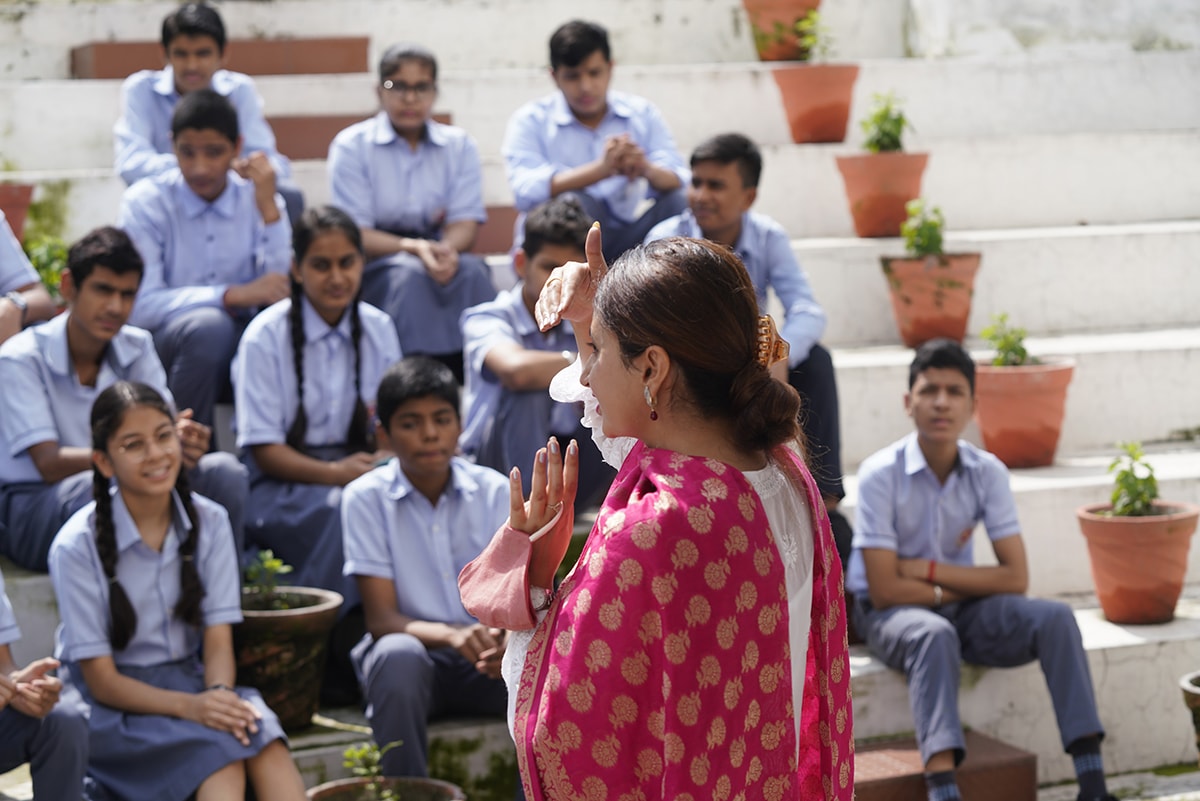
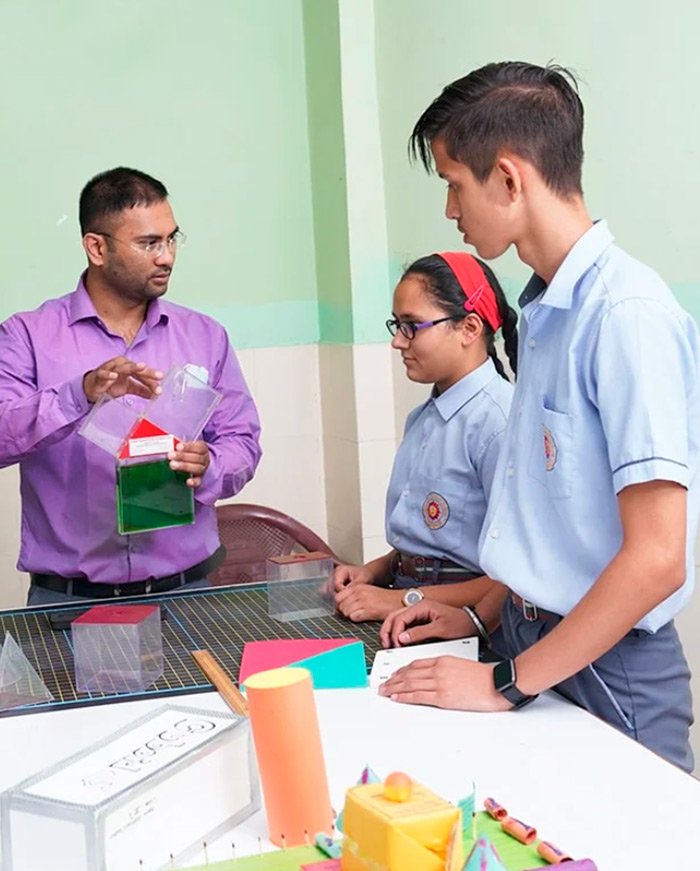
Teacher as Facilitator of Learning
Teachers design learning experiences that:
- Encourage active inquiry, exploration, and dialogue rather than passive reception.
- Move from known to unknown, concrete to abstract, local to global.
- Integrate concepts across disciplines, real-life contexts, and environmental awareness.
Teachers pose thought-provoking questions, scaffold understanding, and allow space for students to arrive at insights independently—honouring the belief that true learning emerges from within.
Teacher as Observer and Guide
Recognising that each learner is unique, teachers:
- Observe students’ cognitive styles, emotional states, interests, and pace of learning.
- Adapt instruction to meet diverse learning needs (differentiation and inclusion).
- Provide timely feedback that is descriptive, encouraging, and growth-oriented.
Teachers maintain anecdotal records, learning journals, and observation notes to support holistic development rather than rely solely on test performance.
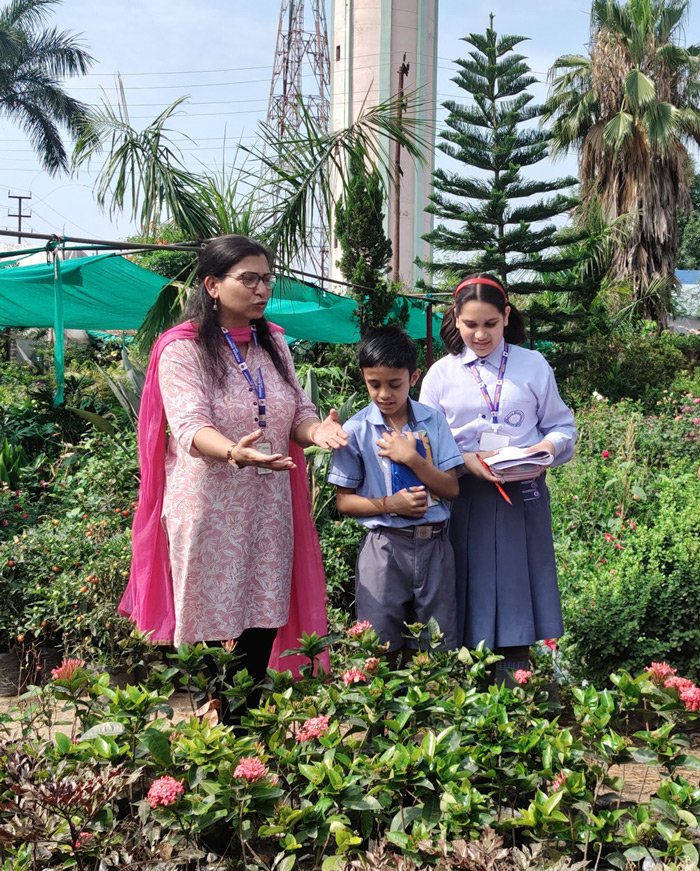
Teacher as Role Model and Value Carrier
Teachers consciously embody the school’s core values:
- Integrity, empathy, respect, simplicity, responsibility, and joy in learning
- Democratic behaviour, attentive listening, emotional balance, and ethical conduct
Through daily interactions, teachers demonstrate how to think, relate, question, and act, understanding that values are caught more than taught.
Teacher as Curriculum Designer
Within the CBSE framework, teachers are empowered to:
- Contextualise curriculum to the local environment, culture, and student realities
- Design interdisciplinary projects, experiential tasks, and inquiry modules
- Integrate art, movement, storytelling, nature studies, and technology meaningfully
Lesson planning focuses on learning outcomes, competencies, and life skills, not merely syllabus completion.
Teacher as Reflective Practitioner
Teachers regularly engage in:
- Self-reflection on classroom practices and student responses
- Peer collaboration, lesson study, and professional dialogue
- Continuous professional development aligned with NEP 2020
Reflection helps teachers remain self-aware, unbiased, and responsive, ensuring the classroom remains a dynamic learning space.
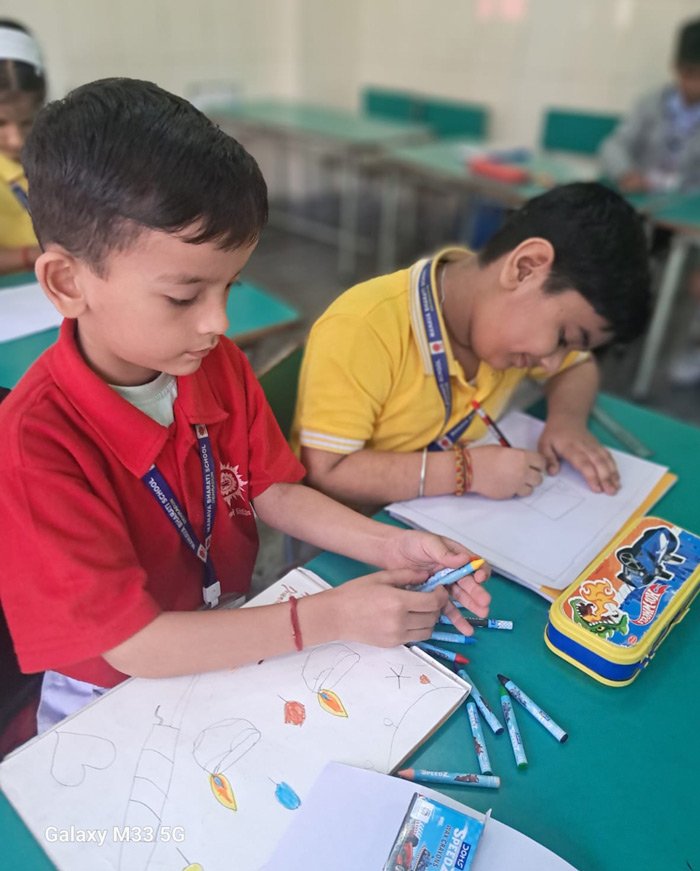
Learner-Centred Classrooms
Classrooms are designed as safe, inclusive, and stimulating spaces where:
- Students feel free to express ideas without fear of judgment
- Curiosity, questioning, and divergent thinking are encouraged
- Mistakes are treated as essential steps in learning
Seating arrangements, groupings, and activities are flexible to support collaboration and dialogue.
Experiential and Inquiry-Based Learning
Daily classroom practices include:
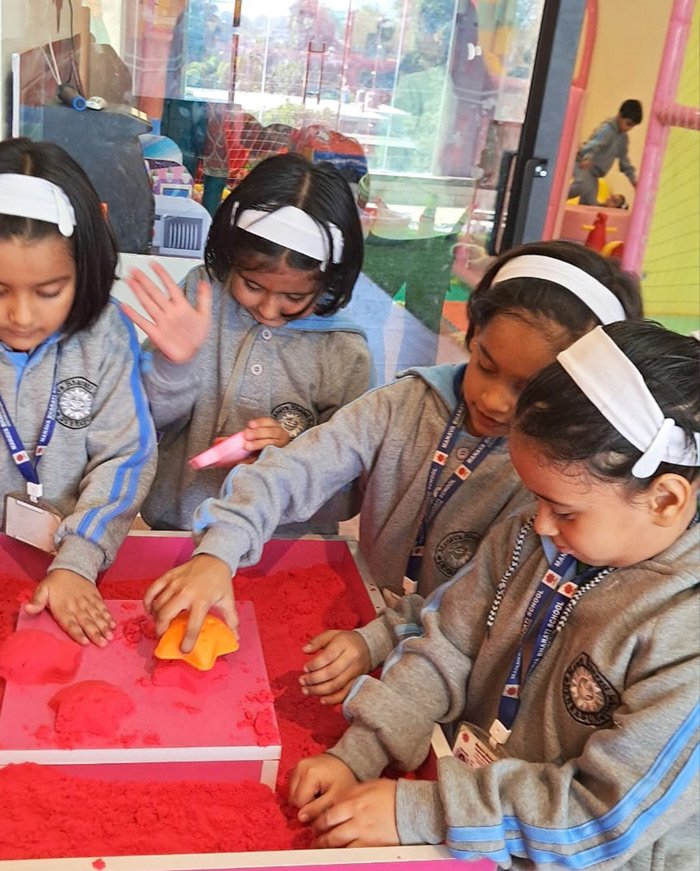
- Hands-on activities, experiments, simulations, and field-based learning
- Project-based and problem-based learning (PBL)
- Open-ended tasks that develop reasoning, creativity, and decision-making
Learning emphasizes depth over speed and understanding over memorisation.
Integrated Use of Assessment
Assessment is seamlessly woven into teaching through:
- Observation, questioning, discussions, portfolios, and student reflections
- Peer and self-assessment to develop metacognition and responsibility
- Feedback focused on progress, effort, and strategies, not comparison
Formal assessments are used judiciously and mapped clearly to competencies and learning outcomes.
Emotional and Social Learning in Practice
Teachers consciously nurture:
- Emotional literacy, empathy, cooperation, and conflict resolution
- Mindfulness, silence, reflection, and awareness activities
- Healthy teacher–student relationships based on trust and respect
The classroom is seen as a micro-society where children learn to live and work harmoniously with others.
Integration of Nature and Environment
In keeping with the school’s natural setting and philosophy:
- Learning frequently extends beyond the classroom into nature
- Environmental awareness, sustainability, and stewardship are lived experiences
- Observation of nature becomes a medium for scientific, artistic, and philosophical inquiry